
Why Your End Of Line Packaging Choice Directly Impacts Factory Profitability
Many factory owners overlook a simple truth: the profit gap between similar production lines often comes down to end of line packaging. As the final step before finished goods shipment, end of line packaging covers carton sealing, palletizing, wrapping and outbound preparation. Whether you rely on manual work or automated processing directly affects your overall production capacity, packaging consistency and long-term operational costs. We have served numerous manufacturing clients whose front-end production runs efficiently, yet face shipment delays and supply chain bottlenecks due to outdated end-stage packaging. Understanding the real differences between manual and automated end of line packaging is essential for factories to upgrade lines and adapt to changing market demands.
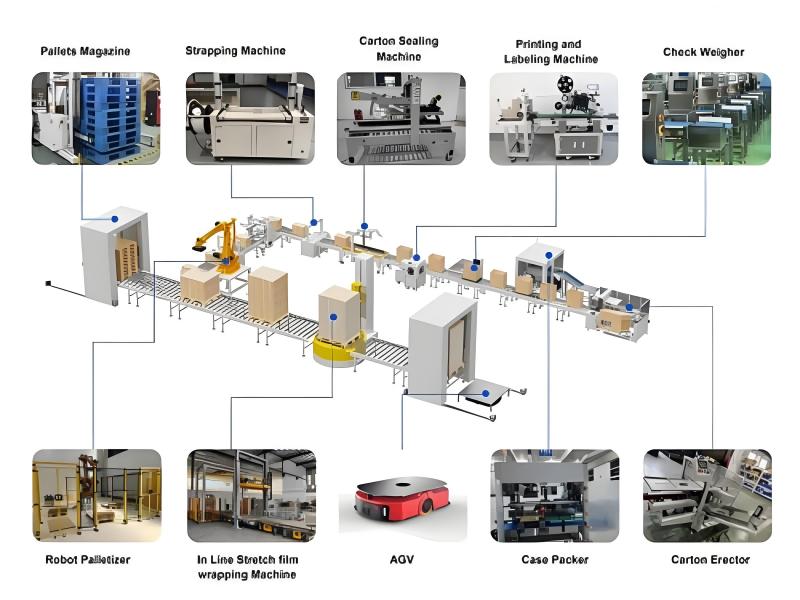
Core Logic and Basic Definition of Manual End of Line Packaging and End-of-Line Automation
Manual end of line packaging is the traditional factory packaging model that relies entirely on workers to complete sorting, packing, sealing and stacking without mechanical assistance. It offers great on-site flexibility, allowing workers to adjust packaging steps freely to handle special orders or irregular products. In comparison, end-of-line automation is a systematic, intelligent solution. Powered by dedicated equipment and preset programs, it realizes fully or semi-automated end-stage packaging. It replaces inconsistent manual operations with standardized, program-driven workflows, completely changing the labor-dependent logic of traditional end of line packaging.
Workflow Differences Between Manual Operation and End of line packaging machine Operation
Manual end of line packaging features scattered, flexible workflows with no fixed operating procedures. Every step depends on worker experience and manual judgment, making it ideal for small-batch, customized orders and special-shaped products that require frequent adjustments. On the contrary, an end of line packaging machine delivers highly standardized, streamlined workflows. Product conveying, carton packing, sealing, coding and stacking are completed by linked equipment following fixed programs. It supports non-stop assembly line production, creating a huge contrast with the fragmented and unstable manual packaging process.
Functional Features and Application Scenarios of Professional End of Line Packaging Machinery
Complete end of line packaging machinery includes automatic cartoners, case sealers, palletizing robots and stretch wrappers, covering every procedure of final product packaging. Designed for high-volume, standardized and continuous mass production, this machinery delivers stable operation and uniform packaging specifications at all times. Unlike manual packaging that suffers from fatigue and human error, end of line packaging machinery handles repetitive, high-intensity packaging tasks flawlessly. It is widely adopted in food, cosmetic, pharmaceutical and general commodity manufacturing industries for consistent and reliable end-line performance.

Comprehensive Differences in Efficiency, Cost and Quality Stability Between the Two Packaging Modes
When it comes to production efficiency, end-of-line automation outperforms manual end of line packaging by a large margin. End of line packaging machine systems can run 24/7 with steady output, while manual work is strictly limited by working hours and physical fatigue. In terms of cost, manual packaging requires almost no upfront equipment investment but accumulates huge long-term expenses on labor, training and management. Automated end of line packaging needs a one-time equipment investment yet greatly cuts ongoing labor costs. For product quality, manual operation inevitably causes inconsistent tightness, uneven sealing and irregular stacking. Automated equipment maintains 100% unified packaging standards, improving product appearance and reducing shipping damage risks.
Practical Selection Guide: Match End of Line Packaging Solutions According to Production Scale
Based on our rich experience serving packaging automation clients, factories can select suitable end of line packaging solutions according to their production scale, order types and budgets. Small-scale manufacturers with limited capital and mainly small-batch, diversified customized orders can benefit from the high flexibility of manual end of line packaging in the short term. For medium and large factories focused on high-volume, fixed-specification and long-term continuous production, upgrading to end-of-line automation and equipping with professional end of line packaging machine sets is the best choice. It effectively eliminates production bottlenecks, stabilizes packaging quality, improves overall operational efficiency and strengthens your factory’s market competitiveness.
Rooted in post-packaging automation, Wuxi Transfo Intelligent Packaging Co., Ltd. relies on Wuxi’s intelligent manufacturing strengths to deliver full-chain packaging services covering R&D, design, production, integration, debugging and after-sales support. We offer tailored end of line packaging solutions ranging from standalone end of line packaging machine units to full end-of-line automation systems for diverse industries. Feel free to contact us for professional packaging consultation and customized factory solutions.

